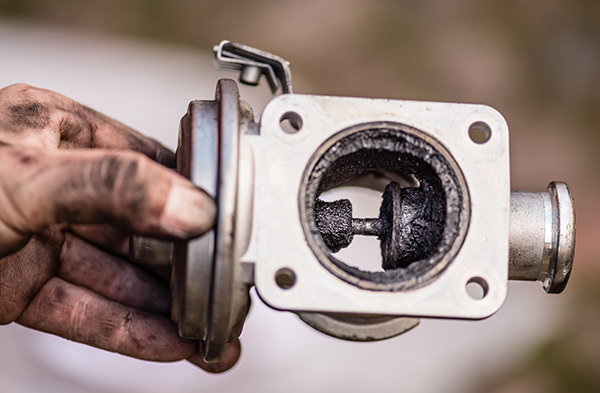
Modern engines have a lot of parts you never see, and the EGR valve is one of the more misunderstood ones. Many drivers only hear about it when there is a check engine light, a rough idle, or an emissions failure. In reality, the EGR system does more than just satisfy regulations. When it works properly, it helps control combustion temperatures, protect the engine, and reduce pollution at the same time.
What the EGR Valve Actually Does
EGR stands for Exhaust Gas Recirculation. The valve’s job is to take a controlled amount of exhaust gas from the exhaust side and feed it back into the intake. That exhaust does not provide power, but it effectively takes up space in the cylinder so the fresh air and fuel mixture burns a little cooler.
The engine computer opens and closes the EGR valve under certain conditions, such as cruising and light acceleration. It does not typically use EGR at idle, wide open throttle, or cold start. The whole idea is to reduce peak combustion temperature just enough to cut down on nitrogen oxide (NOx) emissions without hurting driveability.
How Exhaust Gas Recirculation Helps Your Engine
Hotter is not always better in the cylinder. When combustion temperatures climb too high, the engine creates more NOx, which is tough on air quality and your lungs. EGR mixes a small amount of inert exhaust into the incoming charge, which slows down the burn and drops peak temperature.
Lower combustion temperature helps in a few ways: it reduces NOx emissions, can lessen the risk of spark knock on some engines, and helps protect internal components that would otherwise see more heat stress. You are not “reburning” exhaust gas for power. You are using it as a tool to keep the burn under control.
Common EGR Valve Designs and Where They Live
Different engines use different EGR layouts, but the idea is similar. You will usually find the valve:
Some setups use an EGR cooler to drop the exhaust gas temperature before it re-enters the intake. That cooler can clog with carbon just like the valve can. When we diagnose EGR issues, we look at the whole path: valve, passages, tubes, and any cooler in between.
Symptoms of EGR Valve Problems Drivers Notice
EGR problems do not all feel the same. A valve that is stuck open behaves very differently from one that never opens at all. Common symptoms include:
- Rough idle, stalling, or shaking when the valve is stuck open and letting exhaust in at the wrong time
- Hesitation or flat spots on acceleration if EGR flow is incorrect
- Check engine light with EGR flow, position, or circuit codes
- Poor fuel economy and higher-than-normal NOx or emissions test failures
- Pinging or spark knock on some engines if the EGR is completely inoperative
From the driver’s seat, these can feel like general “tune-up” issues, which is why scan data and targeted testing help pinpoint whether the EGR system is really to blame.
Owner Habits That Can Shorten EGR Valve Life
EGR valves usually fail because of what is moving through them. Soot, carbon, and oil vapors build up over time and start to restrict passages or jam moving parts. Certain habits make that buildup happen faster, such as:
- Lots of short trips where the engine rarely reaches full operating temperature
- Ignoring misfires or rich running conditions that send more unburned fuel into the exhaust
- Delaying oil changes so crankcase vapors carry more sludge into the intake
- Running with poor-quality fuel or ignoring intake and PCV system issues
- Never addressing carbon buildup elsewhere in the intake on engines known for deposits
When we see heavy EGR deposits, it is common to find other carbon problems in the intake and on valves. Cleaning one piece of the system is helpful, but it is usually best to look at how the whole engine is running.
When EGR Problems Become Urgent To Fix
A mild EGR issue that only shows up as a stored code and no obvious driveability problem might be safe to schedule soon, especially if the vehicle still passes emissions. Things become more urgent when the engine starts stalling, idling roughly, or pinging under load. At that point, EGR faults are affecting how the engine actually runs, not just what comes out of the tailpipe.
If the check engine light starts flashing, the engine runs very rough, or you notice strong exhaust smells or knocking, it is smart to have the car inspected promptly rather than continuing to drive and hoping it clears. Ongoing misfires or detonation can damage pistons, valves, and catalytic converters, and a sticking EGR valve can be part of that picture.
Get EGR Valve Service in Auburn, MA, with Fuller Automotive
We diagnose EGR problems every day and know how to tell the difference between a simple deposit issue and a deeper engine concern. We can test EGR operation, inspect passages, and look at related systems so the repair actually solves the root cause, not just the symptom.
Call Fuller Automotive in Auburn, MA, to schedule EGR valve service and keep your engine running clean, smooth, and efficient.