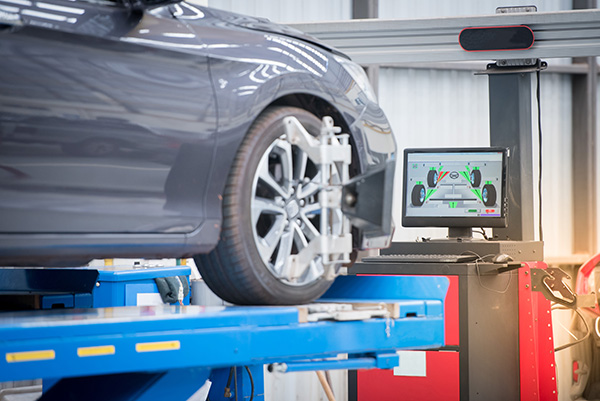
The car follows a straight road, but the steering wheel sits slightly to one side. You notice it every time you look down, then wonder whether it is only a cosmetic annoyance. If the tires are pointing straight ahead, why is the wheel not centered too?
An off-center steering wheel can relate to alignment, steering adjustments, worn components, tire behavior, or the road surface. The cause needs to be checked before the wheel's position is treated as an isolated issue. A proper correction should address how the vehicle tracks and how its steering geometry is set up.
Crooked Steering and a Vehicle Pull Are Different Complaints
A wheel can remain off-center while the car travels along the intended path. In another situation, you may be holding the wheel at an angle to oppose a pull. Those experiences can look similar from the driver's seat, but they do not always point toward the same cause.
Describe whether the car feels settled with the wheel crooked or whether you keep correcting its direction. Note whether the behavior changes with speed, braking, or the road. Keep normal control of the vehicle while observing it. A controlled inspection and appropriate road evaluation can establish the pattern without relying on an improvised hands-off test.
Wheel Alignment Can Leave the Steering Wheel Off-Center
Alignment sets the wheel angles according to the vehicle's requirements. The steering wheel and steering mechanism need to be positioned correctly during the relevant adjustments. If the front toe is adjusted without the proper centering procedure, the tires may track ahead while the wheel sits at an angle.
A previous adjustment, suspension repair, or impact can therefore be part of the history. The shop should check the applicable angles and the centering procedure instead of assuming the steering wheel itself needs repositioning. Ask for an explanation of the findings and the alignment information relevant to your car.
Rear Alignment Can Influence Straight-Ahead Steering
The rear wheels help determine the direction the vehicle naturally tracks. When the rear alignment creates an unsuitable thrust direction, the driver may need a steering correction to follow a straight path. Focusing only on the front of the car can miss that relationship.
Whether rear angles are adjustable depends on the vehicle, but they can still need measurement. A rear suspension impact, worn component, or previous repair may contribute to the result. An appropriate alignment assessment considers the vehicle's complete geometry and any conditions that prevent the specified settings from being achieved or held consistently.
Worn Steering and Suspension Parts Can Change Wheel Position
Tie rods, ball joints, bushings, and other components help maintain the relationship between the steering system and the wheels. Excess movement can change that relationship as the vehicle rolls, turns, or brakes. The amount and source of the wear determine the response.
An alignment is most useful when the parts holding its settings are sound. If something moves excessively or has been damaged, repair may be needed first. A crooked steering wheel accompanied by clunks, looseness, or changing direction deserves a broader inspection. Simply adjusting around a worn component can leave both the handling concern and the tire wear unresolved.
Tire Conditions Can Make You Hold the Wheel Crooked
Incorrect pressure, uneven wear, damage, or a tire's particular rolling behavior can create a directional tendency. The driver then applies steering input to keep the vehicle on the intended path. That can feel like a centering problem even when alignment measurements are within their required range.
Check tire condition and cold inflation as part of the inspection. Mention recent tire replacement, rotation, or a repeated loss of air. Any tire-position changes used for evaluation need to respect directional tires, different axle sizes, and the manufacturer's requirements. The aim is to identify the source of the pull rather than hide it with another adjustment.
Road Shape Can Affect Straight-Ahead Steering
Many roads have a crown or slope that helps water drain. Wind, surface differences, and loading can also influence the steering input needed during a particular drive. A wheel that appears slightly angled on one road but normal on another may be responding to those conditions.
That does not explain every persistent crooked wheel. If the position has changed or remains off-center across ordinary routes, have it assessed. Tell us which roads make it most noticeable and whether the same pattern happens in both directions. Those observations help distinguish a consistent vehicle concern from a surface-related effect.
Bring These Steering Details to the Inspection
These five observations can help us evaluate the off-center wheel.
- When you first noticed the position change.
- Whether an impact, tire service, or suspension repair happened beforehand.
- Whether the vehicle pulls or simply travels straight with the wheel angled.
- Whether braking, speed, or road surface changes the behavior.
- Whether clunks, loose steering, vibration, or uneven tire wear accompany it.
If you have a previous alignment report, bring it along. It can help explain earlier work, although the current measurements and mechanical condition still need assessment. The report should be part of the history, not proof that the car hasn't changed since the appointment.
Steering Correction Should Include the Required Final Checks
Once the underlying condition is addressed, the wheel position and road behavior need verification. Some vehicles also have steering-angle or other electronic procedures specified after relevant work. The exact requirement depends on the system and the repair.
A centered wheel should accompany appropriate alignment and predictable operation, not merely a changed appearance. If the car still pulls, wears tires unevenly, or develops a new warning, share that with the shop. The final result should address the original complaint, with clear records of any repairs and adjustments needed.
Schedule Steering and Alignment Service in Auburn, MA
Fuller Automotive in Auburn, MA, can inspect an off-center steering wheel, tire concerns, and related alignment or suspension problems. Explain when the position changed and how the vehicle behaves so we can check the relevant causes.
Contact us to schedule a steering and alignment inspection.